
How to Get Better at Krillion: Finding the Answer Nobody Gives
Krillion pays almost nothing for the right answer and everything for the rare one. How the doubling ladder works, why a refused answer costs you only seconds, where the obscure answers hide, and what is waiting at the bottom of the ocean.
Introduction
Most quiz games reward you for knowing the answer. Krillion rewards you for knowing the answer nobody else would give. A prompt like "Name a herb with aromatic leaves" has hundreds of correct answers, and nearly all the points sit in the ones almost nobody types. That turns out to be a learnable skill, and the ocean you sink through while you learn it is one of the most beautiful things in a browser game this year. The numbers below are the rules of Krillion Unlimited.
The Ladder Doubles, So One Rare Answer Beats a Safe Dive
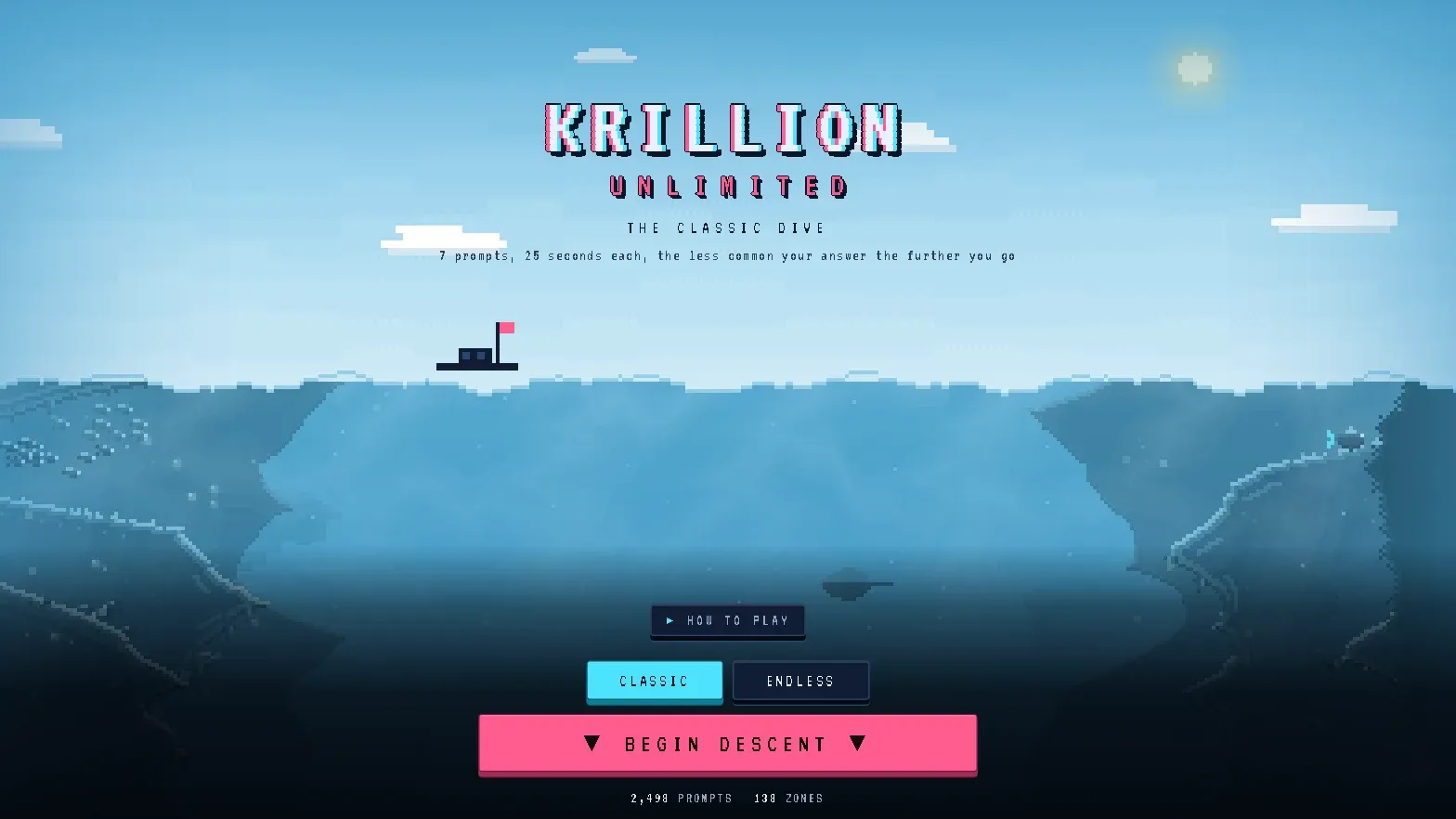
Every accepted answer lands in one of six tiers: Plankton, Too Clever, Schooler, Rare, Deep Cut and One in a Krillion. They are worth 4, 8, 16, 32, 64 and 100 points, so each rung is worth double the one below it, up to the ceiling at 100. Seven Plankton answers, a whole dive of the first thing that came to mind, scores 28. A single Deep Cut scores 64. A single One in a Krillion scores 100.
That arithmetic should change how you think about a prompt. The question is never "what is a correct answer?" It is "what is a correct answer that most people would not reach?" A safe answer is not a small win. On this ladder it is barely a result at all.
A Refused Answer Costs You Only Seconds
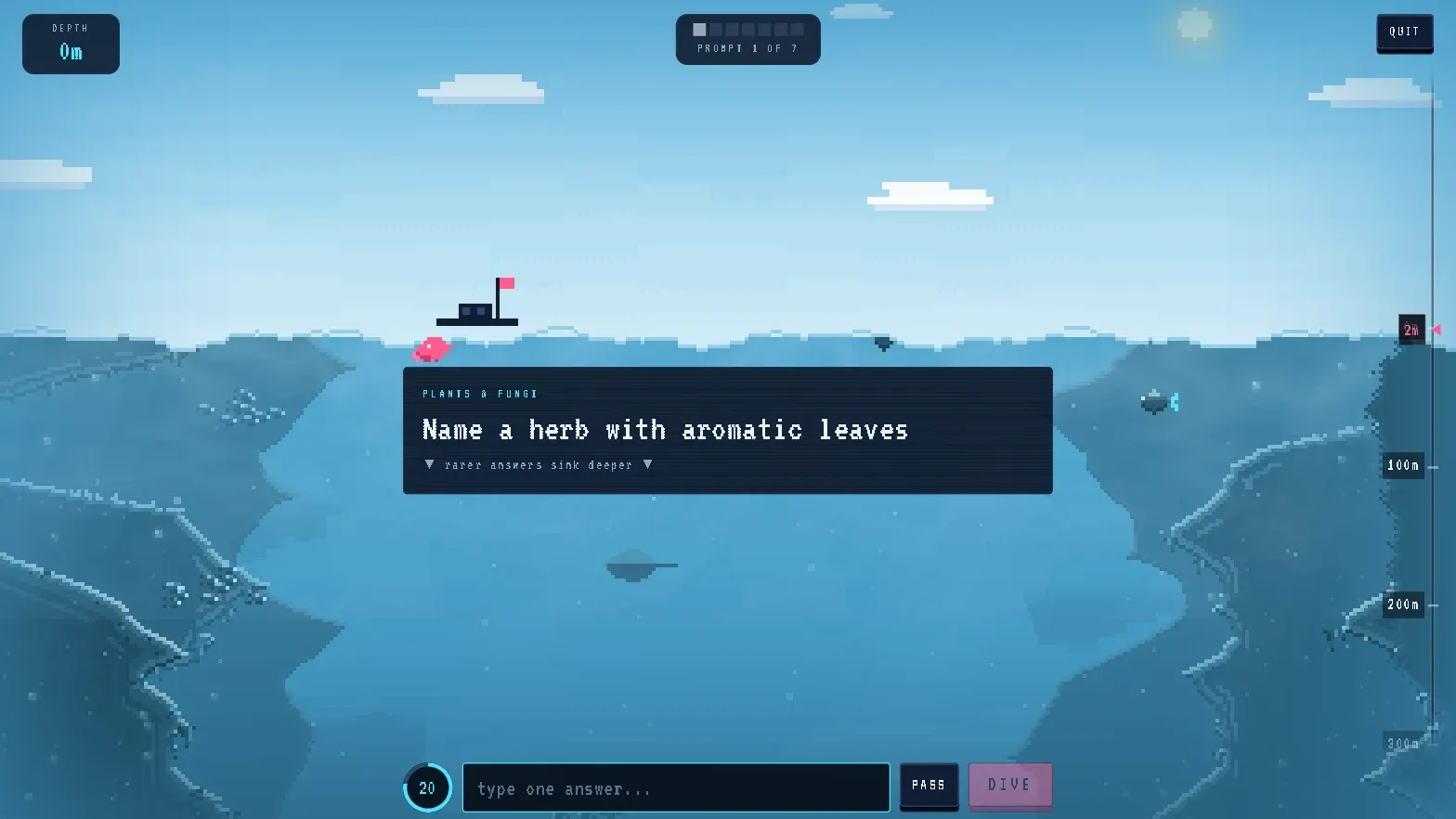
In a Classic dive you get seven prompts and twenty-five seconds for each. The rule that matters most is that a wrong answer is refused, not punished: nothing is taken off your score, and you can type again while the clock is still running. The only thing a refusal costs is the time it took.
So play the order that the rule rewards. Try the obscure candidate first. If it is accepted, you are deep. If it is refused, you still have most of the clock to fall back on something safer. Players who open with the safe answer and then look for a better one have thrown away the only free attempt the prompt gives them, because an accepted answer ends the prompt.
Too Clever Is a Trap With a Name
The second tier has the best name in the game. Too Clever is where the answers that feel like a discovery end up, because they are the second thing everyone thinks of. Asked for a capital city in Africa, most people type Cairo or Nairobi. The people who want to be clever type Ouagadougou, which is famous precisely for being obscure, and so it is not obscure at all. Maseru, Lilongwe or Bangui will probably take you much deeper.
The same thing happens in every category. The herb prompt above is full of basil, mint and rosemary, and the "interesting" answers, coriander and tarragon, are the crowd's second wave. Lovage, shiso, hyssop and epazote are all herbs grown for their aromatic leaves, and far fewer people will name them. If an answer makes you feel pleased with yourself, ask whether it would make a few thousand other people feel the same way.
Go Specific, Then Go Sideways
Three moves find rare answers more reliably than raw knowledge does.
- The technical edge. "Name a programming language created before 1990" invites Fortran, COBOL and C. APL, Forth, Prolog and Smalltalk all qualify comfortably and are named far less often.
- The other country. Most people answer from their own kitchen, map and school syllabus. "Name a dish made with chicken" from someone who has eaten doro wat, the Ethiopian chicken stew, is worth a great deal more than chicken tikka masala.
- The smallest valid example. Prompts ask for a member of a category, and the famous members are the big ones. The minor bay, the obscure river, the fourth-division football ground: the less significant the true answer, the rarer it tends to be.
Answering fast earns nothing on its own. The clock only decides whether you answer at all, so spend the twenty-five seconds looking for the second or third candidate rather than typing the first.
Endless Flips the Maths
Endless mode deals one prompt at a time with no end, on three tanks of air. A refusal still costs only seconds, but a prompt that ends with nothing accepted, because the clock ran out or you passed, costs a tank. A One in a Krillion answer gives one back, up to three. The prompts also get harder the deeper you go.
That changes the strategy. In Classic the only cost of chasing a long shot is a weaker answer at the buzzer; in Endless, running the clock down costs air. With three tanks, spending twenty seconds hunting for something truly obscure is cheap. On your last tank, bank a Rare answer you know is valid while there is still time, rather than spending the clock on the brilliant one you are only fairly sure of. Good Endless runs are mostly Schooler and Rare answers, with the long hunts saved for when the air is full.
The Ocean Is the Scoreboard
Every point sinks the krill ten metres, so your score is literally a depth, and the ocean you fall through is the reason people keep playing after the prompts stop being new. The first eleven thousand metres follow the real sea: sunlit shallows and a kelp cathedral, the twilight edge where daylight runs out, anglerfish territory, a shelf where the Titanic lies at about 3,800 metres, glowing hydrothermal vents, the hadal zone named for Hades, and finally Challenger Deep, just short of eleven kilometres down.
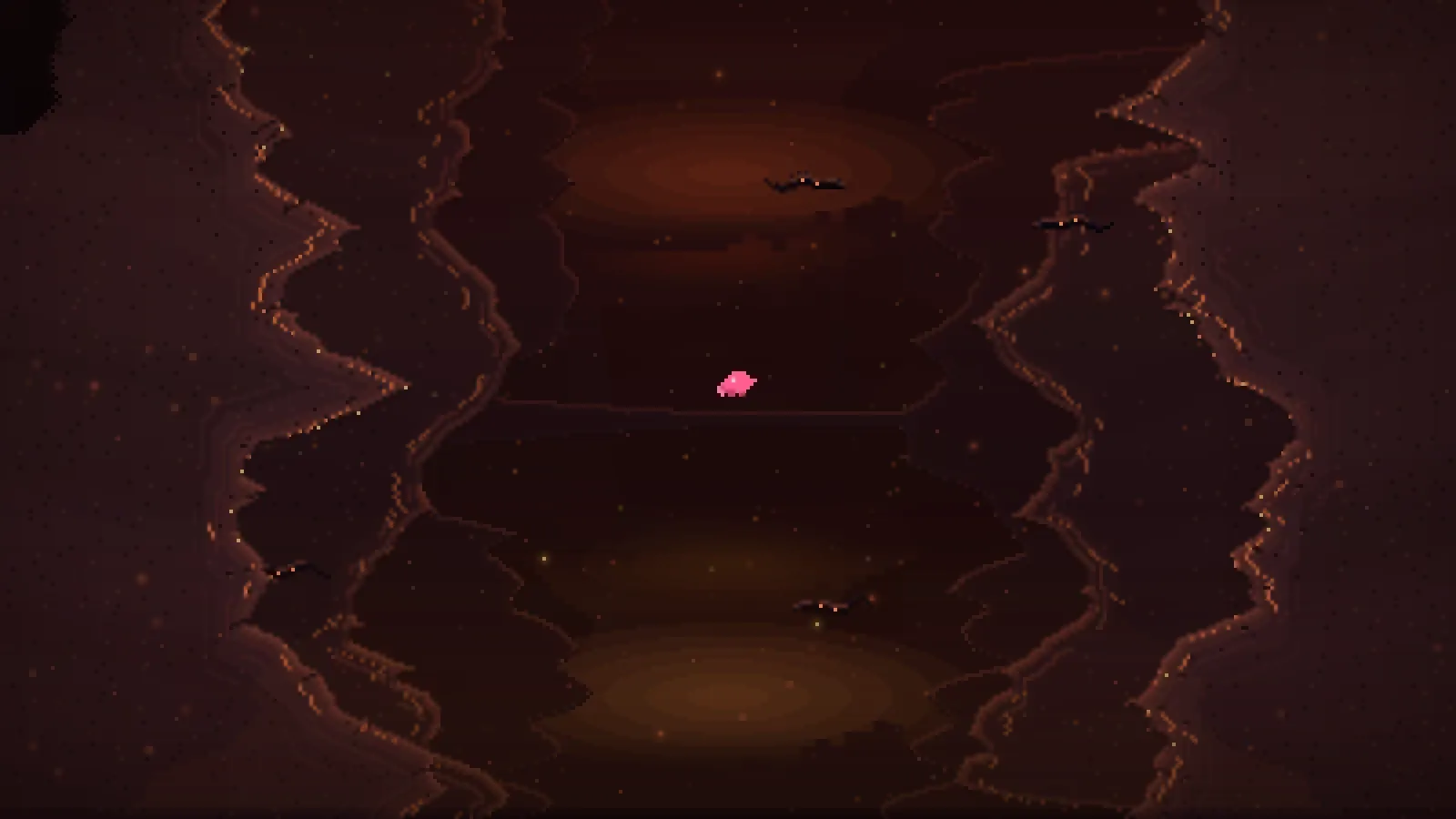
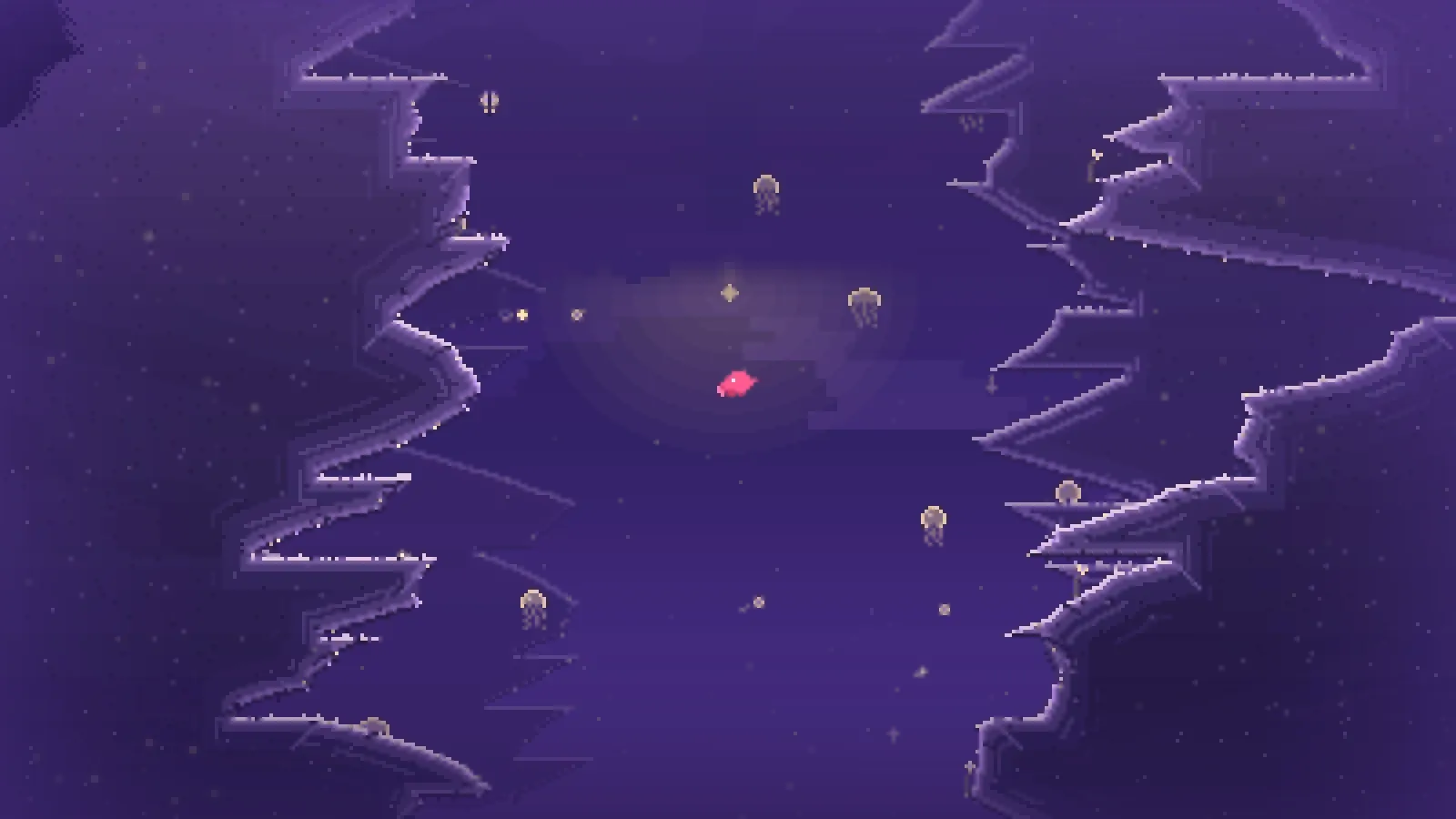
A perfect Classic dive, seven answers at the top tier, is 700 points and 7,000 metres, which puts you on the trench floor. Endless keeps going past the real ocean into places nobody has charted because they do not exist: a glass orchard, a drowned skyline, a coral parliament, an amethyst fault, a great whalefall. There are 138 zones in all, each one named and written by hand, and each has its own rock colours and its own creatures, drawn at exactly the krill's pixel size so nothing is ever scaled up to look impressive.
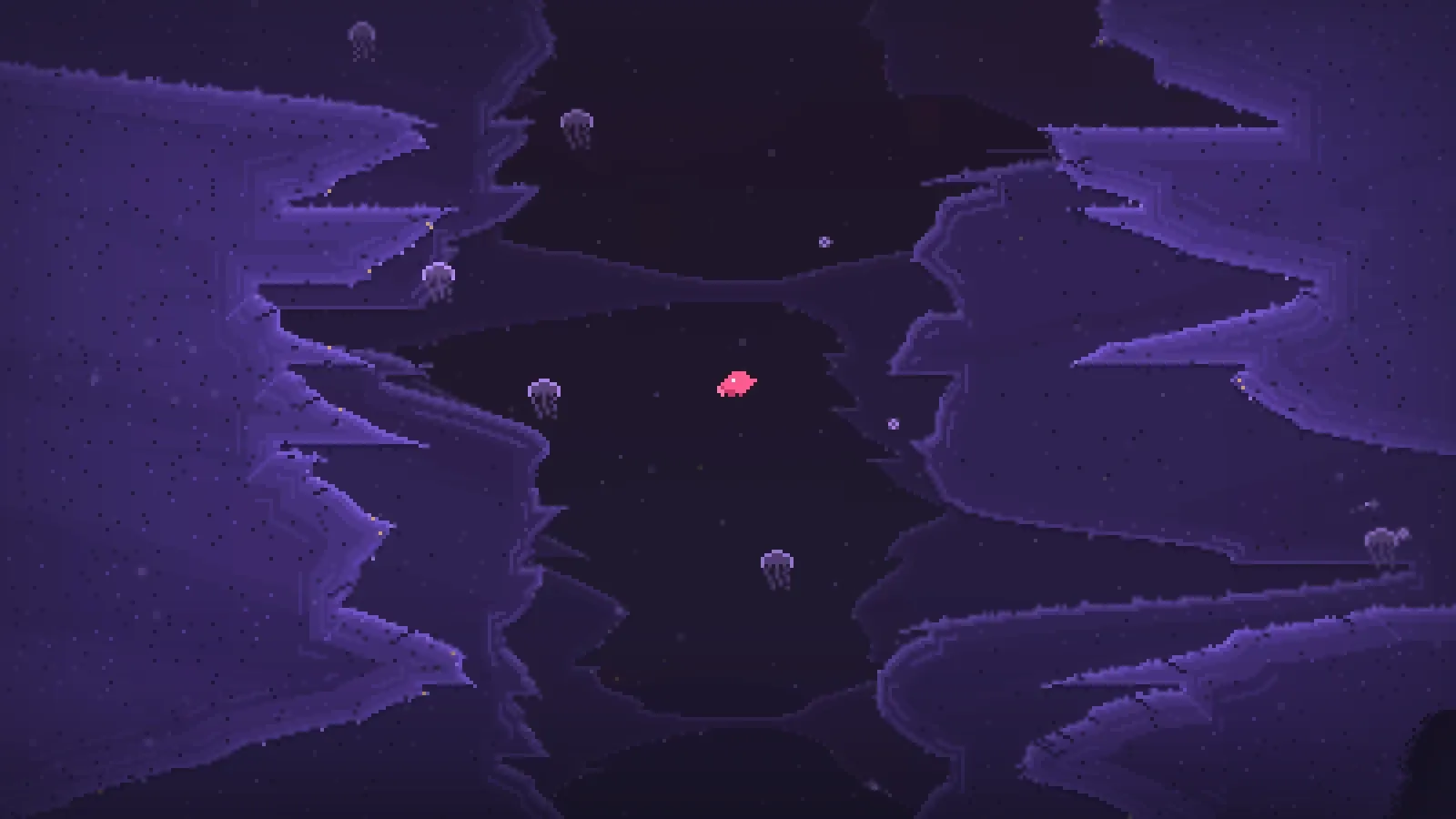
The walls change from zone to zone rather than repeating, sunlit blue giving way to rust, then to green masonry, then to purples that do not look like any real sea. The bottom of the world is a shrine at 250 kilometres. A hundred prompts will not get you there, and that is rather the point.
A Realistic Target
Nobody reaches the trench floor in Classic, because it takes seven One in a Krillion answers in a row. A dive that lands mostly in Schooler and Rare scores somewhere between 110 and 225 points, which is 1,100 to 2,250 metres, past the point where the sunlight gives out and down among the anglerfish. One Deep Cut in a dive is a genuinely good result, and one One in a Krillion is the kind of answer you remember.
Where to Dive
The skill that improves fastest is the instinct for which answers the crowd will reach, and that only comes from volume. Krillion Unlimited deals seven new prompts every time you refresh, from a bank of about 2,500, and Endless mode keeps dealing until the air runs out.
A lot of the prompts are about places, and a capital you can name is worth more when you can find it: MapTap asks where in the world it is. And if you want the opposite discipline, a game where the sensible answer wins and the wild one is punished, Size It Up is exactly that. We wrote up how to get better at it too.
About the author
Anok is a student and devoted puzzle fan whose love of the genre started with the simple games of childhood. He explores what makes a daily puzzle worth coming back to, day after day.